

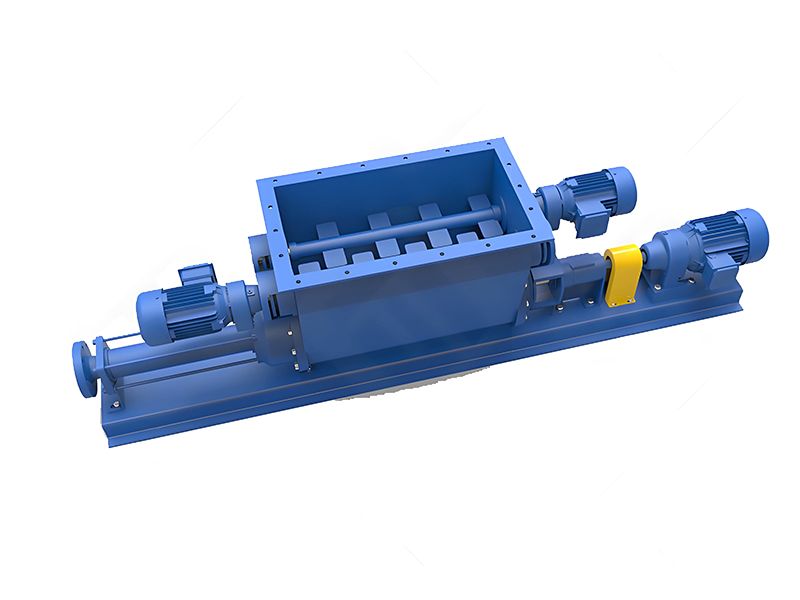
Rotor design improvements for screw pumps are one of the fastest ways to increase efficiency, reduce wear,
cut lifecycle costs, and expand the operating envelope of positive displacement pumping systems.
This guide explains the key aspects of screw pump rotor design, recent engineering advances,
and how optimized rotors improve reliability and performance in demanding industrial applications.
The information in this article is technology- and brand?neutral. It focuses on industry?standard
concepts, definitions, advantages, and specification guidelines that can be applied to a wide range
of screw pump types, including single?screw, twin?screw, and multi?screw pumps used in
oil and gas, chemical processing, food and beverage, wastewater, power generation, and other
sectors.
In a screw pump, the rotor is the primary rotating element that generates flow and pressure.
Rotor design improvements for screw pumps focus on the geometry, surface, and material of
one or more intermeshing screws that convey fluid along the pump housing. The rotor forms
closed chambers or cavities with the stator or pump casing; as the rotor turns, these chambers
move axially, transporting liquid from suction to discharge with minimal pulsation.
Key attributes of a screw pump rotor include:
Rotor design improvements for screw pumps must account for differences between
common screw pump categories:
| Screw Pump Type | Rotor Configuration | Typical Applications | Key Rotor Design Focus |
|---|---|---|---|
| Single?screw / Progressive Cavity Pump | One metallic rotor running eccentrically inside an elastomeric or metallic stator | Sludge, slurries, viscous chemicals, shear?sensitive products | Rotor/stator fit, pitch, surface finish, wear resistance |
| Twin?screw Pump | Two intermeshing screws, either timed (non?contacting) or contacting | Multiphase fluids, crude oil, bitumen, food products, low NPSH conditions | Screw profile accuracy, timing, clearances, hydraulic balance |
| Three?screw / Multi?screw Pump | One driven power rotor with two or more idler rotors | Lubricating oils, fuel oils, hydraulic fluids, high?pressure service | Load distribution, noise reduction, high?pressure sealing lines |
| Custom High?Performance Screw Pumps | Application?optimized multi?screw sets with special geometries | Subsea, cryogenic, high?temperature, highly abrasive or corrosive services | Advanced materials, coatings, CFD?optimized profiles |
Regardless of the configuration, rotor design improvements for screw pumps
target the same objectives: higher efficiency, lower wear, stable operation over a broad range
of viscosities, and reduced total cost of ownership.
Rotor geometry is the most critical factor in rotor design improvements for screw pumps.
Helical screw profiles define the size and shape of the pumping chambers and their sealing lines.
Important geometric parameters include:
Surface engineering is a major component of rotor design improvements for screw pumps.
Surface finish directly influences friction, wear, and the ability of a rotor to handle viscous or
solid?laden media.
Common rotor coatings and treatments include:
Material selection is central to rotor design improvements for screw pumps.
The right material must balance strength, corrosion resistance, abrasion resistance,
and cost while being compatible with the pumped fluid.
| Rotor Material | Key Characteristics | Typical Use Cases | Design Considerations |
|---|---|---|---|
| Carbon Steel | High strength, economical, moderate corrosion resistance | Cleans fuels, lubricating oils, non?corrosive fluids | Often requires surface coating in corrosive or abrasive service |
| Stainless Steel (304, 316) | Good corrosion resistance, moderate strength | Chemicals, food and beverage, mildly corrosive fluids | Common base for additional surface treatments |
| Duplex / Super Duplex Stainless Steel | Very high strength, excellent corrosion and stress?corrosion resistance | Offshore oil and gas, seawater injection, aggressive brines | Higher cost; machining and heat treatment must be carefully controlled |
| Tool Steels & Alloy Steels | High hardness and wear resistance after heat treatment | Abrasive slurries, high?pressure services | Often combined with carburizing, nitriding, or coatings |
| Hardened Nickel?Base Alloys | Superior corrosion and erosion resistance | Highly corrosive chemicals, wet H2S service | Suitable for extreme environments; premium cost |
Rotor design improvements for screw pumps must account for mechanical stiffness.
Rotors are subject to torsional loads from transmitted torque and bending loads from hydraulic
forces and misalignment. Insufficient stiffness can cause:
Optimized rotor cross?sections (for example, modifying core diameter or adding internal support)
increase stiffness without undue weight, improving the stability of high?speed or high?pressure
screw pumps.
Modern rotor design improvements for screw pumps rely heavily on CFD
(Computational Fluid Dynamics) and FEA (Finite Element Analysis) tools.
By simulating fluid flow and stress distributions inside the pump, engineers can fine?tune
screw profile parameters such as:
These rotor design improvements for screw pumps directly translate into:
Manufacturing technology plays a critical role in making rotor design improvements for screw pumps
practical and repeatable. Precision machining methods include:
These advanced production methods allow manufacturers to reliably produce rotors with:
For single?screw progressive cavity pumps, rotor design improvements are
closely linked to matching the rotor to its stator. The rotor has a single helix geometry,
while the stator is a double helix. Matching these components requires careful control of:
Modern rotor designs may use:
In twin?screw pumps, rotor design improvements often address the choice between
timed non?contacting rotors and contacting rotors:
position; rotors do not touch, reducing wear and allowing dry running for short periods.
sealing capability, typically in lubricating services.
Advances in rotor profile design and timing gear accuracy allow non?contacting twin?screw
pumps to handle low?viscosity fluids with reduced slip, expanding the application range while
maintaining reliability.
Another trend in rotor design improvements for screw pumps is the use of hybrid profiles
tailored to specific applications. Examples include:
By customizing rotor geometry, screw pump designers can minimize energy consumption while
protecting the integrity of sensitive products.
One of the primary goals of rotor design improvements for screw pumps is higher efficiency.
Improvements in rotor geometry and surface finish reduce:
| Design Aspect | Effect on Efficiency | Typical Improvement Range |
|---|---|---|
| Optimized screw profile (pitch, helix, clearances) | Reduces slip and internal recirculation | +3 % to +10 % volumetric efficiency |
| Enhanced surface finish and coatings | Decreases friction and wear | +1 % to +5 % mechanical efficiency |
| Improved rotor?stator fit (PC pumps) | Maintains sealing lines over a wider operating range | +5 % to +12 % total pump efficiency |
| Balanced rotor stiffness | Limits vibration and keeps clearances stable | +1 % to +3 % overall energy savings |
Rotor design improvements for screw pumps significantly extend component life.
By regulating clearances, refining contact patterns, and employing hard, wear?resistant
materials and coatings, rotor wear is slowed, and maintenance intervals are lengthened.
Modern industrial systems demand pumps that can handle a wide range of:
Rotor design improvements for screw pumps focus on maintaining stable performance
across these variable conditions. This includes:
Noise and vibration are often overlooked but crucial aspects of rotor design improvements
for screw pumps. Improved rotor balance, smoother helix transitions, and CFD?optimized
chamber filling and emptying all contribute to:
When pumping high?viscosity or non?Newtonian fluids, rotor design improvements for screw pumps
concentrate on:
Applications include:
For abrasive media, rotor design improvements for screw pumps aim to
minimize direct wear on critical sealing lines:
Typical services:
In food, beverage, and pharmaceutical industries, rotor design improvements for screw pumps
are driven by hygienic requirements:
High?pressure and high?temperature services place severe mechanical and thermal loads
on rotors. Rotor design improvements for screw pumps used in these conditions include:
The following tables illustrate example specification ranges often considered when
implementing rotor design improvements for screw pumps. Actual values depend on
the detailed pump design and application requirements.
| Parameter | Single?Screw (PC Pump) | Twin?Screw Pump | Multi?Screw Pump |
|---|---|---|---|
| Rotor Diameter Range | 20 – 400 mm | 30 – 350 mm | 20 – 250 mm |
| L/D Ratio | 5:1 – 12:1 | 3:1 – 8:1 | 4:1 – 10:1 |
| Helix Angle | Low to moderate (application?dependent) | Compromise between flow and torque | Optimized for pressure and lubrication |
| Pitch / Lead | Short to moderate for higher pressure per stage | Moderate to long for high flow | Shorter lead for high?pressure service |
| Radial Clearance | Tight interference with elastomer stator | Non?contacting, micrometer?scale gap | Very small clearances for sealing lines |
| Service Type | Recommended Surface Roughness (Ra) | Typical Rotor Surface Hardness | Notes |
|---|---|---|---|
| Clean, lubricating fluids | 0.4 – 0.8 μm | 35 – 50 HRC | Standard machining and mild hardening often sufficient |
| Abrasive slurries | 0.8 – 1.6 μm | 55 – 65 HRC (coated or hardfaced) | Hard coatings and wear?resistant alloys reduce erosion |
| Hygienic / sanitary service | ≤ 0.6 μm (polished) | 30 – 45 HRC | High?polish stainless steel to meet cleanability standards |
| Corrosive chemicals | 0.4 – 1.0 μm | Range depends on alloy; corrosion resistance prioritized | High?alloy or corrosion?resistant materials with selective hardening |
| Screw Pump Type | Viscosity Range | Typical Pressure Range | Common Speed Range |
|---|---|---|---|
| Single?Screw (PC Pump) | 1 – 1,000,000 cP | Up to 48 bar or more (multi?stage) | 50 – 600 rpm |
| Twin?Screw Pump | 0.5 – 1,000,000 cP (wide range) | Up to 100 bar depending on model | 200 – 3600 rpm |
| Multi?Screw Pump | 10 – 10,000 cP (primarily lubricating) | Up to 160 bar or more | 600 – 3600 rpm |
These ranges are illustrative. Rotor design improvements for screw pumps allow
designers to stretch or optimize these operating envelopes for particular applications,
especially when using advanced materials and geometries.
When specifying rotor design improvements for screw pumps in a project or retrofit,
engineers should start with a detailed definition of process requirements:
From this data, rotor designers can select:
Rotor design improvements for screw pumps often involve trade?offs:
Application?specific optimization is key to selecting the right compromise between efficiency,
robustness, and cost.
Many operators look for rotor design improvements for screw pumps in
existing installations to improve performance without replacing the entire pump.
When retrofitting:
Relatively small gains in efficiency from rotor design improvements for screw pumps
can produce large energy savings over the pump’s operating life. Because screw pumps
often run continuously, even a 3–5 % efficiency increase can significantly reduce power costs.
Extending rotor life and reducing wear directly decreases:
In critical services such as refinery, offshore, or power generation applications, improved rotor
reliability can offer significant economic benefits when loss of production is considered.
When evaluating rotor design improvements for screw pumps, total cost of ownership
should be considered rather than initial purchase price alone. TCO includes:
A more advanced rotor design often pays back its higher initial cost through lower operating costs
and longer service intervals.
As computing power increases, rotor design improvements for screw pumps
are relying even more on digital tools:
Additive manufacturing (AM) enables rotor geometries that are difficult or impossible to
machine conventionally, such as:
As AM matures for metal parts in demanding environments, it is likely to influence
the next generation of rotor design improvements for screw pumps.
Integrating smart sensors for vibration, temperature, and torque allows operators
to monitor the health of screw pump rotors in real time. This feedback can be used to:
This closed?loop approach further enhances the benefits of rotor design improvements by
combining better hardware with intelligent operation.
Rotor design improvements for screw pumps offer a powerful lever for improving the
performance, reliability, and cost?effectiveness of positive displacement pumping systems.
By focusing on rotor geometry, materials, surface engineering, and precision manufacturing,
designers and operators can achieve:
For engineers, specifiers, and end users, understanding rotor design improvements for screw pumps
is essential when selecting new equipment, retrofitting existing installations, or planning
long?term maintenance and optimization strategies. By carefully matching rotor design to
application requirements, it is possible to significantly reduce total cost of ownership while
meeting increasingly demanding performance and reliability targets.
```

Copyright ? Jiangsu Longjie Pump Manufacturing Co., Ltd.



 Phone
Phone
Comment
(0)