

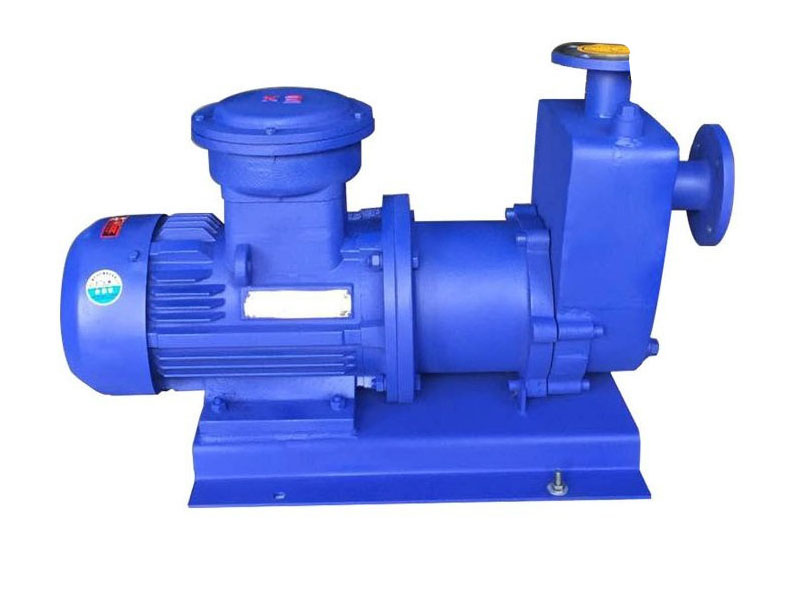
Vertical screw pumps are widely used in high-flow applications where stable flow, high reliability, and
compact installation are critical. This guide explains how vertical screw pumps work, the main advantages
they offer in high-flow duties, and what engineers should consider when selecting a vertical screw pump
for demanding industrial processes.
A vertical screw pump is a positive displacement pump in which one or more helical rotor
elements (screws) are arranged vertically and rotate within a close-fitting stator or housing. The
vertical orientation allows the pump to handle high flow rates in limited floor space,
often with the pump casing partially or fully submerged in a sump, pit, or tank.
In high-flow applications, vertical screw pumps are typically used to move large volumes of liquid at
relatively low to medium differential pressures with a continuous, low-pulsation flow profile. They can
be designed as:
While there are many variations, the defining feature is the use of a helical screw geometry
to displace liquid and the vertical installation that supports efficient high-flow duties,
particularly where suction conditions are challenging or where compact plant layouts are required.
Vertical screw pumps operate on the principle of positive displacement. Fluid is trapped
in cavities formed between the rotating screws and the pump housing or stator and is transported
axially from the suction side to the discharge side.
In vertical single-screw designs, a metallic helical rotor turns inside a resilient stator. As the rotor
turns, cavities open and close in a progressive sequence, moving the liquid upward. The flow is
practically continuous with low pulsation, making these pumps suitable for shear-sensitive or
contamination-sensitive fluids.
Multi-screw vertical pumps use two or more intermeshing screws. One screw is typically driven by the
motor, and the other(s) rotate by meshing via timing gears. The screws form sealed chambers with the
pump casing; fluid trapped in these chambers is moved axially upward as the screws rotate.
Short suction path: With the inlet located at the bottom, near or below the liquid
surface, the suction lift is minimized, supporting high flow with low Net Positive Suction Head (NPSH)
requirements.
Gravity-assisted priming: The vertical design allows the pump to remain primed
naturally when submerged, reducing the risk of air binding and improving reliability at high flow.
Flooded suction configurations: High-flow vertical screw pumps often operate with
flooded suction, which is ideal for large-volume transfer from pits, sumps, or reservoirs.
When specifying a pump for high-flow applications, engineers often compare vertical screw pumps with
centrifugal pumps, vertical turbine pumps, and horizontal screw pumps. Each has unique advantages, but
vertical screw pumps offer a distinctive combination of flow stability, low NPSH, and
versatility.
range, while centrifugal pump flow varies significantly with system head.
better for challenging suction conditions and high-flow transfer from deep pits.
less performance degradation than centrifugal pumps.
pulsation compared to many centrifugal designs.
better than vertical turbine pumps.
control via speed regulation without losing efficiency at off-design conditions.
turbine designs in some high-flow applications.
compact plants or retrofit projects.
suction, enhancing reliability at high flow where suction piping losses are significant.
vertical designs rely on proper layout for convenient servicing.
| Feature | Vertical Screw Pump | Centrifugal Pump | Vertical Turbine Pump |
|---|---|---|---|
| Flow Type | Positive displacement, nearly constant | Variable with system head | Hydrodynamic, head-dependent |
| High-Flow Capability | Excellent, especially at low/medium head | Excellent at designed duty point | Excellent for deep wells and intakes |
| NPSH Required | Low | Medium to high | Medium |
| Viscosity Range | Very wide | Limited; efficiency drops at high viscosity | Primarily low-viscosity fluids |
| Solids Handling | Good, depending on design | Moderate to poor without special design | Limited |
| Pulsation | Low | Low to moderate | Low |
| Shear on Fluid | Low | Medium to high | Medium |
| Best Use Cases | High-flow, difficult suction, viscous or shear-sensitive fluids | Clean, low-viscosity fluids at steady conditions | Large water transfer from deep sources |
Vertical screw pumps offer several advantages that make them particularly attractive for high-flow
industrial and municipal processes. The benefits are both hydraulic and mechanical, leading to improved
process performance and lower total cost of ownership.
Screw pumps generate a nearly continuous flow with very low pulsation, even at large capacities. This is
crucial where:
In many high-flow applications, the pump draws from deep pits, reservoirs, or sumps with long suction
lines. Vertical screw pumps handle these conditions better than many alternatives due to:
Vertical screw pumps are well-suited to high flow of:
clearances).
In the target operating window, vertical screw pumps can be highly efficient due to:
The vertical arrangement significantly reduces floor space. This provides:
Screw pumps are known for quiet, low-vibration performance. In high-flow systems, this
contributes to:
Properly designed vertical screw pumps exhibit high reliability in continuous high-flow service due to:
Although designs differ, most vertical screw pumps for high-flow applications share common structural
and hydraulic features.
High-flow vertical screw pumps commonly employ:
The choice of materials depends on fluid chemistry, temperature, and solids content. Typical materials
include:
| Component | Common Materials | Typical Use Conditions |
|---|---|---|
| Casings / Housings | Cast iron, carbon steel, stainless steel | General industrial, water, oils, chemicals |
| Screws / Rotors | Alloy steel, stainless steel, hardened steel | Clean or slightly dirty liquids, moderate abrasives |
| Stators (PC type) | Nitrile, EPDM, FKM, specialty elastomers | Viscous slurries, sludges, chemical solutions |
| Bearings | Anti-friction bearings, sleeve bearings | High-load vertical operation, long service life |
| Seals | Mechanical seals, packed glands | Leak-tight, low-maintenance operation |
Vertical screw pumps are selected for high-flow duty across many industries, especially where process
reliability and flow stability are more important than achieving very high differential pressures.
Understanding key performance characteristics helps engineers size and specify a vertical screw pump
for high-flow service.
Vertical screw pumps can be designed for a very wide flow range. Typical high-flow units can handle:
The exact flow capacity depends on screw diameter, pitch, speed, and number of screws.
Although screw pumps are positive displacement machines, high-flow vertical screw pumps are usually
applied where differential pressures are moderate. Typical values:
System efficiency depends on pump design, fluid properties, and operating point. High-flow vertical
screw pumps can achieve:
A major advantage is the relatively low NPSH required (NPSHr). This allows:
Vertical screw pumps are commonly driven by variable-speed motors to optimize high-flow performance:
Proper selection is crucial to realize the advantages of vertical screw pumps in high-flow applications.
Engineers should evaluate several factors before finalizing a specification.
Planning the installation of a vertical screw pump for high-flow service is as important as the pump
selection itself.
Vertical screw pumps are often chosen for high-flow applications where uptime is essential. Proper
maintenance planning maximizes reliability and optimizes life-cycle cost.
When correctly sized and installed, vertical screw pumps provide:
The following tables illustrate typical specification ranges for vertical screw pumps used in high-flow
applications. Actual values depend on manufacturer design and project-specific requirements.
| Parameter | Typical Range | Notes for High-Flow Applications |
|---|---|---|
| Flow Rate | 50 – 10,000 m3/h (220 – 44,000 gpm) | Larger custom designs may exceed this |
| Differential Pressure | 2 – 25 bar (30 – 360 psi) | Many high-flow units operate at lower pressures |
| Operating Temperature | -20°C to 200°C (-4°F to 392°F) | Depends on materials and seals |
| Viscosity Range | 0.5 – 100,000 cP | Positive displacement design handles wide viscosity range |
| NPSH Required | Low, often < 3 m (10 ft) | Vertical submerged design helps minimize NPSHr |
| Speed | 300 – 3600 rpm | Optimized based on fluid and duty |
A typical data sheet for a high-flow vertical screw pump may include the following fields.
| Category | Field | Description |
|---|---|---|
| Hydraulic | Rated Flow | Design flow at nominal operating point |
| Hydraulic | Rated Differential Pressure | Required head or pressure rise across the pump |
| Hydraulic | NPSH Required | Pump suction head requirement at rated flow |
| Process Fluid | Specific Gravity | Fluid density relative to water |
| Process Fluid | Viscosity | Fluid viscosity at operating temperature |
| Process Fluid | Solids Content | Particle size and concentration, if applicable |
| Mechanical | Number of Screws | Single, twin, or multi-screw configuration |
| Mechanical | Materials of Construction | Casing, rotor, stator, shaft, seal materials |
| Mechanical | Shaft Length | Total immersed length plus over-floor height |
| Mechanical | Seal Type | Single, double, or packed gland details |
| Electrical | Motor Power | Installed motor rating in kW or HP |
| Electrical | Motor Speed | Base speed at rated frequency |
| Electrical | Voltage and Frequency | Supply characteristics, e.g., 400 V, 50 Hz |
| Electrical | Control Method | Fixed speed or variable-speed drive (VFD) |
Yes. Vertical screw pumps are widely used for high-flow water and wastewater transfer, especially when
suction conditions are challenging or when the liquid contains solids or has variable properties. Their
low NPSH requirements and stable flow make them well-suited to long-duration, high-volume operation.
Vertical screw pumps can be engineered to handle abrasive or dirty fluids by selecting appropriate
materials, coatings, and clearances. For severe abrasion, consult detailed design data and consider wear
parts, protective linings, and adequate filtration to maintain long service life.
Flow is typically controlled by adjusting pump speed using variable-frequency drives. Because vertical
screw pumps are positive displacement machines, flow is almost directly proportional to speed, allowing
efficient and accurate control without excessive throttling losses.
Vertical screw pumps are positive displacement devices that deliver a nearly constant flow regardless of
discharge pressure within their design limits. Vertical centrifugal pumps are dynamic pumps whose flow
varies with system head. Screw pumps also have better low-NPSH performance and can handle a wider
viscosity range than many centrifugal designs.
Vertical screw pumps are designed for high reliability and predictable maintenance. Access to mechanical
seals, bearings, and drive components is provided at or above the floor level. Proper layout, lifting
provisions, and condition monitoring help ensure that inspection and repairs can be carried out
efficiently.
In many installations, vertical screw pumps are installed with flooded suction or submerged in the liquid.
In these cases they remain naturally primed, minimizing the need for separate priming systems. Where
suction conditions are more complex, priming arrangements must be evaluated based on the project design.
Vertical screw pumps combine the benefits of positive displacement technology with the space-saving
advantages of vertical installation. In high-flow applications they deliver stable, low-pulsation
performance, handle difficult suction conditions, and work reliably across a wide range of fluid
properties. When correctly selected and installed, vertical screw pumps provide an efficient, robust, and
versatile solution for demanding industrial and municipal high-flow pumping systems.
```

Copyright ? Jiangsu Longjie Pump Manufacturing Co., Ltd.



 Phone
Phone
Comment
(0)