

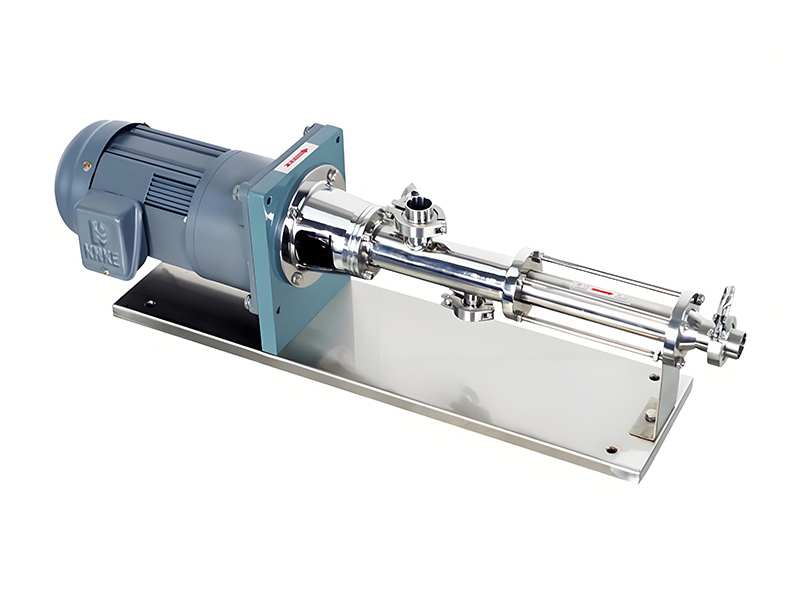
Modern screw pumps are engineered to deliver long service life, high reliability, and stable efficiency under demanding operating conditions.
A key driver behind this performance is the continuous evolution of screw pump materials.
From early cast iron designs to advanced duplex stainless steels, engineered coatings, and specialized elastomers,
material selection directly determines durability, energy consumption, and lifecycle cost.
A screw pump is a positive displacement pump that uses one or more helical screws to transfer fluid
along the pump axis. As the screws rotate, closed cavities move from the suction side to the discharge side,
generating continuous, low-pulsation flow. Screw pumps are widely used for:
Depending on design, typical types include three-screw pumps, twin-screw pumps, and progressive cavity (single-screw) pumps.
Although their geometries vary, all share a core requirement: carefully engineered materials that deliver durability under
mechanical, chemical, and thermal stresses.
The durability of a screw pump is driven primarily by its materials of construction.
Correct material choices reduce wear, limit corrosion, prevent elastomer degradation,
and maintain surface finish over many operating cycles. Poor material selection leads to:
For this reason, the evolution of screw pump technology has closely followed developments in metallurgy,
polymer science, and surface engineering.
Several performance needs define how screw pump materials have evolved:
Each new generation of screw pump materials aims to improve at least one of these durability-related properties without
compromising cost-effectiveness or manufacturability.
Early screw pumps, particularly three-screw pumps used for lubricating oil,
were predominantly manufactured from cast iron with carbon steel shafts.
These materials offered:
However, they were limited in strongly corrosive or abrasive environments.
As industries required more aggressive services, these early materials showed
accelerated wear, corrosion pitting, and shortened service life.
The next major step in the evolution of screw pump materials was the adoption of austenitic stainless steels
such as 304 and 316. These alloys provided significantly improved:
Stainless steels opened the door for screw pumps to be used more widely in:
But in highly chloride-containing media, such as seawater or brine,
standard austenitic stainless steels remained vulnerable to pitting and crevice corrosion,
prompting interest in more advanced alloys.
Duplex stainless steels and super duplex alloys represent a further stage in the evolution of screw pump materials.
Featuring a mixed microstructure of austenite and ferrite, these alloys offer:
Duplex alloys are now widely used in screw pumps handling:
For extreme corrosion challenges, screw pump components have evolved to include:
These high-performance materials are more costly,
so they are usually limited to critical parts such as screw flanks, wear sleeves, or liners
where enhanced durability brings major lifecycle cost benefits.
Progressive cavity screw pumps rely heavily on elastomer stators.
Such designs have benefited from parallel development in elastomer technology,
moving from basic nitrile rubbers to formulated compounds such as:
These elastomers provide improved chemical resistance, heat resistance, and fatigue life,
directly enhancing screw pump durability in a wide variety of media.
The metallic materials used in screw pumps can be grouped into several major categories.
Each offers a different balance of cost, mechanical strength, corrosion resistance,
and wear performance that influences overall pump durability.
| Material Category | Typical Alloys | Key Durability Features | Typical Pump Components |
|---|---|---|---|
| Cast Iron & Carbon Steel | Grey iron, ductile iron, carbon steels | Good strength, cost-effective, limited corrosion resistance | Casings, non-corrosive application screws |
| Austenitic Stainless Steel | 304, 316, 316L | Good general corrosion resistance, sanitary surfaces | Screws, housings, shafts, wetted parts |
| Duplex Stainless Steel | 2205, 2507 and similar | High strength, excellent chloride stress corrosion resistance | Screws, rotors, casings in harsh environments |
| Nickel-Based Alloys | Alloy 625, C-276, etc. | Outstanding chemical and temperature resistance | Critical wetted components, liners, sleeves |
| Hardened & Tool Steels | Through-hardened, case-hardened steels | High wear resistance, good fatigue strength | Screw flanks, wear rings, bushings |
| Specialty Alloys | Precipitation-hardened steels, cobalt alloys | Tailored high strength and corrosion resistance | High-load screws, critical rotor sections |
Cast iron and carbon steel remain widely used for screw pump casings and sometimes screws
in non-corrosive or mildly corrosive services.
Their key advantages include:
However, their poor resistance to aggressive chemicals and seawater
often leads to surface degradation and shortened life in more demanding environments.
To enhance durability, these materials are sometimes combined with internal coatings or linings.
Austenitic stainless steels are the most common corrosion-resistant materials used in screw pumps today.
They offer:
| Alloy | Durability Features | Common Uses in Screw Pumps |
|---|---|---|
| 304 Stainless Steel | Good corrosion resistance, economical | Casings, non-critical screws, clean water applications |
| 316 / 316L Stainless Steel | Improved pitting resistance due to molybdenum | Chemical, food, marine, and more aggressive media |
For many installations, 316 or 316L stainless steel provides a durable balance
between performance and cost for screw pump rotors, housings, and shafts.
Duplex stainless steels are favored in screw pump services where chloride stress corrosion cracking
or high mechanical loads threaten long-term durability. Their advantages include:
Super duplex grades provide further improvements for extremely high chloride environments.
These materials are especially attractive for offshore, marine,
and desalination-related screw pump installations.
Where chemical attack is severe, such as in strong acids, oxidizing environments, or mixed aggressive streams,
nickel-based alloys and other specialty materials may be chosen.
They offer:
These high-end materials are more expensive, but they significantly extend screw pump life in harsh media,
reducing unplanned downtime and maintenance costs.
In abrasive screw pump services, surface hardness and toughness are critical.
Hardened steels and carbide-based inserts are used to improve wear resistance of:
These materials carry hard particles without rapid erosion,
maintaining screw profiles and internal clearances for a longer period
and thereby protecting volumetric efficiency and rotor stability.
In progressive cavity screw pumps, elastomeric stators are essential to pump operation.
The stator material forms a tight seal with the metallic rotor, generating the cavities
that move fluid along the pump. Elastomer durability influences:
A range of elastomer materials are used in screw pumps and associated seals:
| Elastomer Type | Key Durability Features | Typical Applications |
|---|---|---|
| NBR (Nitrile Rubber) | Good oil resistance, cost-effective | Mineral oils, fuels, lubricants, general industrial fluids |
| HNBR (Hydrogenated Nitrile) | Improved heat and chemical resistance compared with NBR | Hot oils, automotive fluids, more demanding services |
| EPDM | Excellent steam and hot water resistance, good weathering | Water, wastewater, some chemical and food processing |
| FKM/FPM (Fluoroelastomer) | Outstanding high-temperature and chemical resistance | Chemical processing, aggressive oils, solvents |
| Silicone | Wide temperature range, good flexibility | Specialty low-temperature or high-temperature applications |
| Perfluoroelastomers | Near-universal chemical resistance, very high temperature capability | Extreme chemical services, high-value fluids |
Beyond elastomers, engineered polymers and composites are increasingly used to extend screw pump durability:
These materials can reduce metal-to-metal contact, lower friction, and resist corrosion,
leading to longer life of both metallic and non-metallic parts.
Selecting the correct elastomer for the screw pump stator or seals is essential.
Mismatched materials can swell, harden, crack, or chemically degrade,
leading to loss of sealing and pump failure.
Key factors include:
Careful matching of elastomer type to process conditions
is one of the most cost-effective ways to enhance screw pump durability.
Even when a base material has good inherent properties,
surface coatings and treatments can further improve screw pump durability.
Coatings aim to:
A variety of metallic and non-metallic coatings are used on screw pumps:
| Coating / Treatment | Durability Benefits | Typical Application Areas |
|---|---|---|
| Hard Chrome Plating | High hardness, improved wear resistance | Screw surfaces, shafts, wear sleeves |
| Thermal Spray Coatings (e.g., carbide) | Superior abrasion resistance, corrosion protection | High-wear regions, abrasive slurry contact areas |
| Electroless Nickel Plating | Even coverage, good corrosion resistance | Complex geometries, internal passages |
| Nitriding / Carburizing | Surface hardening without significant dimensional changes | Screw flanks, gears, shafts |
| Polymeric Coatings (e.g., epoxy, polyurethane) | Corrosion barrier, smooth low-friction surface | Casing internals, non-critical screw surfaces |
| Passivation of Stainless Steel | Improved corrosion resistance by enhancing the passive film | All stainless wetted surfaces |
Surface roughness and finish quality significantly impact screw pump material durability.
Smoother surfaces:
Precision machining, polishing, and controlled coating application are therefore
integral parts of durable screw pump design.
Materials must withstand the mechanical demands of screw pump operation, including:
High-strength steels or duplex alloys may be selected when load-bearing capacity
and fatigue resistance are paramount for durability.
Chemical compatibility is one of the most influential factors in screw pump material selection:
Misjudging chemical compatibility can result in rapid pitting, stress corrosion cracking,
elastomer swelling, and premature pump failure.
Elevated or fluctuating temperatures can accelerate:
Materials with appropriate temperature ratings and matched thermal expansion coefficients
help preserve screw pump alignment and sealing under real operating conditions.
When screw pumps handle fluids containing sand, grit, or fibrous solids,
abrasion becomes a major durability concern. Harder materials, such as:
are often used in critical wear zones while more economical materials
can be used elsewhere for cost optimization.
In food, beverage, and pharmaceutical applications, screw pump materials must comply with:
High-polish stainless steels and approved elastomers are commonly used to ensure
both durability and regulatory compliance.
Material selection is ultimately a balance between initial cost and lifecycle value.
While advanced alloys and coatings are more expensive upfront,
they often provide:
For many applications, investing in higher performing screw pump materials
yields a lower total cost of ownership over the pump's lifetime.
Screw pumps are used to handle a remarkable range of fluids.
From a material standpoint, these can be grouped into:
The following table summarizes typical materials of construction
for durability in different fluid categories.
Actual selection requires detailed analysis of the exact media and operating conditions.
| Fluid Category | Base Metals | Elastomers / Polymers | Durability Considerations |
|---|---|---|---|
| Lubricating Oils, Fuels | Cast iron, carbon steel, 304 / 316 stainless | NBR, HNBR | Good lubrication aids wear resistance; corrosion risk low to moderate |
| Water and Wastewater | 316 stainless, duplex stainless | EPDM, NBR, specific wastewater compounds | Corrosion from dissolved salts and chemicals; potential abrasion from solids |
| Chemical Solutions | 316L, duplex, nickel alloys | FKM, EPDM, perfluoroelastomers | Chemical compatibility and temperature resistance are critical |
| Food and Beverage | 316L stainless, sometimes duplex | Food-grade NBR, EPDM, FKM | Hygiene, cleanability, and compatibility with CIP/SIP chemicals |
| Crude Oil with Sand | Duplex, super duplex, hardened surfaces | HNBR, abrasion-resistant elastomers | Abrasion from sand, corrosion from water and gases |
| Highly Aggressive Chemicals | Nickel alloys, specialty alloys | Perfluoroelastomers, advanced fluoropolymers | Maximum corrosion and chemical resistance for long-term durability |
For optimal screw pump durability, a detailed analysis of the pumped media is essential.
This includes:
These parameters determine the optimal combination of metallic materials, elastomers,
and coatings for long-lasting screw pump operation.
Screw pumps in the oil and gas industry are exposed to a combination of corrosive,
abrasive, and high-pressure conditions. Durability-focused material strategies typically involve:
Chemical plants demand materials that can withstand aggressive solvents, acids, and bases.
Common durability enhancements include:
In hygiene-critical industries, screw pump materials must provide both durability
and cleanability:
Progressive cavity screw pumps are widely used for sludge and wastewater.
Durability is improved by:
In highly abrasive environments, screw pump materials must focus on wear resistance:
As operating pressures rise and environments become more corrosive,
the use of duplex and super duplex stainless steels in screw pump construction is growing.
These alloys provide a proven combination of strength and corrosion resistance,
extending pump life in challenging conditions.
Modern screw pumps benefit from advanced coating technologies such as:
These surface engineering solutions enable the use of more economical base materials
without sacrificing surface durability.
Material science advancements continue to produce new elastomer compounds
tailored for screw pump service. Trends include:
There is increasing emphasis on sustainable screw pump materials and designs,
including:
Digital simulation and corrosion prediction tools are helping engineers
optimize screw pump material selection. The result is more precise matching of:
These tools support evidence-based decisions that increase screw pump durability.
The evolution of screw pump materials has transformed these pumps from
basic machines handling clean, non-corrosive fluids
into robust workhorses capable of operating reliably in
highly corrosive, abrasive, and thermally challenging environments.
Enhancing screw pump durability depends on:
By understanding how screw pump materials have evolved and how each option contributes to durability,
engineers and end users can design pumping systems that offer longer service life,
reduced maintenance requirements, and lower total cost of ownership.
```

Copyright ? Jiangsu Longjie Pump Manufacturing Co., Ltd.



 Phone
Phone
Comment
(0)